Autonomy Delay: Tesla Narrows FSD Promise to Robotaxi Zones
Unsupervised driving for owners is now limited to specific geofenced areas within Tesla's managed fleet, pushing the full rollout to mid-2027.
By Tariq Mahmoud ·
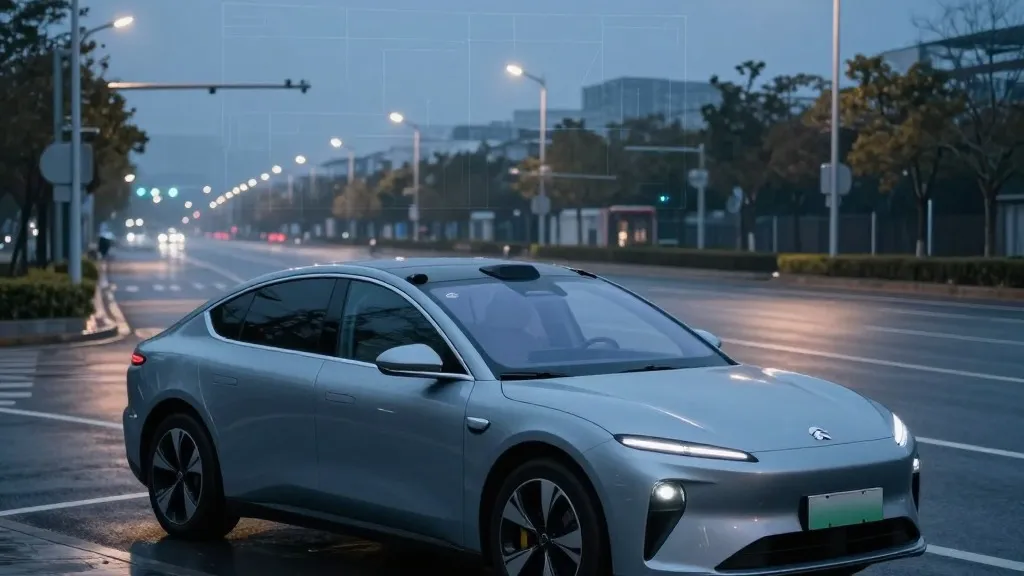
The long-awaited promise of a car that drives itself anywhere has just been redefined into a much narrower, zone-specific service. On the Q3 2026 earnings call, Tesla executives clarified that unsupervised Full Self-Driving (FSD) for customer-owned vehicles is now targeted for the second quarter of 2027. However, this update does not grant owners the freedom to drive their cars unsupervised to any destination. Instead, the feature allows owners to add their personal vehicles to Tesla’s managed Robotaxi network, meaning the car will only operate without supervision within the specific geofenced areas where Tesla’s Robotaxi service is already active.
This development represents a significant shift from the original marketing pitch. For nearly a decade, Tesla has sold FSD as a software update that would eventually allow a car to drive itself anywhere. On the call, AI chief Ashok Elluswamy addressed a top retail shareholder question regarding the timeline for unsupervised FSD in customer cars. His response confirmed the Q2 2027 target but framed the initial release as an integration into the Robotaxi fleet rather than a standalone capability for personal use. This distinction is critical: owners are not getting a universal autonomous vehicle, but rather a car that can function as part of Tesla’s operational network.
The current operational footprint for these unsupervised zones is limited. Tesla’s Robotaxi service currently operates in six US metropolitan areas, but the service areas often cover only small slices of those cities. For example, in Miami, the zone primarily includes West Miami and a strip toward Doral and Sweetwater. Similar small geofences were established when the service launched in Orlando and Tampa in July. Within these boundaries, the vehicles stick to low-speed routes, largely avoid highways, and steer clear of complex urban environments. In the Bay Area, the service is not yet unsupervised due to California regulations that require a safety driver in every car unless specific data is released to the DMV, a step Tesla has been cautious about taking.
The scale of the current unsupervised fleet remains modest. Tesla reported that its Robotaxi program reached nearly 2 million cumulative unsupervised miles by the end of Q3, a milestone achieved one month after the Cybercab joined the Austin fleet. However, third-party tracking from this spring indicated that only dozens of fully driverless Teslas were on the road, a fraction of the hundreds of thousands previously discussed. Meanwhile, competitor Waymo had already established a presence in both Orlando and Tampa before Tesla’s arrival and has logged over 3 million miles, highlighting the gap in operational scale despite Tesla’s aggressive timelines.
The discrepancy between the product sold and the product delivered has been a source of tension for years. In July 2025, Elon Musk stated that unsupervised FSD would be available for personal use in certain geographies by the end of that year. A year prior, he expressed surprise if the technology was not ready the following year. Additionally, owners with Hardware 3 (HW3) have been informed that their vehicles cannot run unsupervised FSD, with no clear upgrade path provided. Now, with the target set for Q2 2027, the focus has shifted to a model where the car operates under Tesla’s terms within controlled zones, rather than as a fully independent autonomous vehicle.
The delay and narrowing of scope suggest that safety remains the primary bottleneck. Elluswamy reiterated that safety is the limiting factor, which is why Tesla restricts operations to low-speed roads and avoids harder environments. He estimated that these safety issues could be resolved by next year, though he acknowledged the uncertainty. For consumers, this means the unsupervised commute is only possible if both the home and workplace fall within one of the designated Robotaxi zones. There are no highway road trips or cross-town airport runs in this initial phase.
For the Pacific Northwest and other regions, the implication is that the widespread adoption of unsupervised personal driving is still years away. Until Tesla expands its geofences and resolves regulatory hurdles, such as those in California, the promise of a self-driving car remains a service rather than a universal feature. The Q2 2027 date serves as a new benchmark, but one that is strictly confined to the operational boundaries of the Robotaxi fleet.
Source: Electrek