Tesla's $50 Billion Fleet Becomes a Mapping Machine as FSD Strategy Shifts
Tesla is leveraging its global fleet to build proprietary maps, a strategic shift aimed at fixing FSD's speed limit and routing errors and aligning its operations with Waymo's model.
By Andrew Fletcher ·
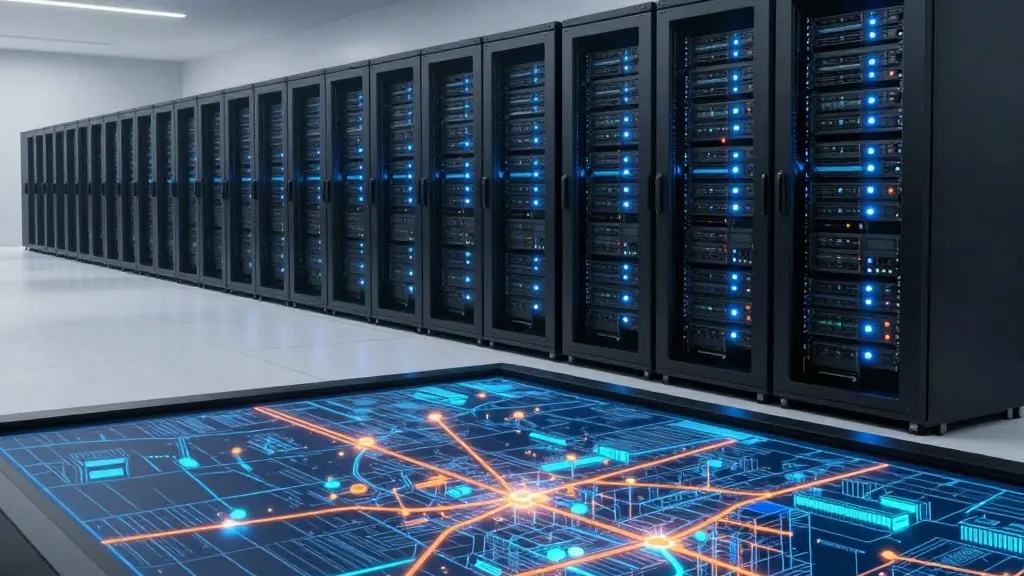
Tesla’s Q3 2026 earnings call revealed a strategic pivot that challenges the company’s long-standing market position: the automaker is now building its own proprietary maps to correct recurring errors in its Full Self-Driving (FSD) system. This development marks a significant departure from previous guidance, where the company argued that reliance on external cartographic data made autonomous driving systems brittle and inefficient. By leveraging its massive vehicle fleet, Tesla is effectively transforming its customer base into a data collection network, a move that brings its operational model closer to that of its primary competitor, Waymo.
The shift toward internal mapping was detailed by Ashok Elluswamy, Tesla’s VP of AI, who acknowledged that the company should not depend on external providers for critical navigation data. He explained that Tesla is developing a new AI-based architecture that synthesizes collective fleet data to create a proprietary map layer. This system is designed to handle specific pain points, including accurate speed limit identification, route optimization, and parking protocols. The rollout is phased, with FSD version 15 initially managing the start and end of trips, while full navigation and destination handling are expected to follow over the coming months.
This reversal follows a decade of mixed messaging regarding the necessity of maps. In 2015, Tesla launched Autopilot with plans for high-precision mapping. However, by 2019, CEO Elon Musk publicly dismissed high-precision lane maps as a "huge mistake" and a "really bad idea," arguing that they rendered systems extremely brittle. That same year, he labeled lidar a "fool’s errand," positioning Tesla’s vision-only approach as a superior, universal solution. The recent announcement suggests that the fleet’s practical struggles with environmental understanding have necessitated a return to cartographic support, despite years of public skepticism.
The need for this map layer is underscored by recent performance data. Last month, a Belgian road safety group reported that FSD vehicles exceeded speed limits in 55% of 30 km/h zones in Brussels, often because the system misread the signage as 50 km/h. Simultaneously, the U.S. National Highway Traffic Safety Administration is weighing an investigation into Tesla Robotaxis speeding through active school zones. These incidents highlight that while vision systems excel at object detection, they often fail at interpreting static environmental rules, a gap that proprietary maps aim to close.
From a market perspective, this strategy aligns Tesla with the operational model of Waymo, which maps cities using sensor-equipped vehicles before launching service. While Tesla does not currently use centimeter-level HD maps, its fleet-built data could evolve into a detailed cartographic advantage. This approach supports Tesla’s Robotaxi service, which operates within geofenced areas, and sets the stage for unsupervised FSD in consumer vehicles, currently targeted for Q2 2027. By internalizing the map, Tesla reduces dependency on third-party licensing fees and gains greater control over the data that drives its autonomous capabilities.
The financial implications are significant. A map built from millions of vehicles offers a scalable data advantage that competitors with smaller fleets may struggle to match. As Tesla moves to integrate voice commands and individual driver preferences into this new mapping architecture, it is positioning its software stack as a more comprehensive, end-to-end solution. This strategic adjustment suggests that the era of vision-only autonomy is giving way to a hybrid model where AI and proprietary cartography work in tandem to reduce error rates and enhance the reliability of the driving experience.
Source: Electrek